


We provide schematics, BOMs, PCB design files, interface specifications, and other engineering documentation. Your team can use these files to maintain, modify, and further develop the product.

Embedded Hardware Design & Development Services
We develop embedded electronics around the product’s functional, electrical, mechanical, and operating requirements. Our embedded hardware engineering services address key design constraints early, including power, interfaces, component selection, manufacturability, and system integration. This reduces technical risk and costly design revisions as the product moves from prototype to production.

What we do
We develop complete embedded hardware platforms — from compact MCU-based devices to complex systems using SoCs and single-board computers — that bring sensors, communication interfaces, and onboard processing into a unified system. Through embedded system architecture design, we balance processing requirements, memory, I/O, power consumption, and thermal constraints early in development. This approach simplifies firmware integration and helps reduce signal integrity and EMI risks before PCB layout is finalized. The result is a cost-effective design prepared for efficient testing, manufacturing, and future product updates.


Platform & Component Selection
Product requirements determine how much processing power the hardware really needs. Our team evaluates performance, power consumption, unit cost, and operating conditions before choosing between MCUs, SoCs, or single-board computers. We also compare proven off-the-shelf modules with custom board designs to find the right trade-off for the project. This keeps embedded hardware solutions cost-effective without adding processing capacity the application does not need.
System Architecture Design
Reliable embedded systems start with a clear architecture built around performance and system constraints. Before schematic design begins, we map key data paths, power domains, and interfaces in functional block diagrams. Our embedded system architecture design accounts for bandwidth, timing, power requirements, and dependencies between major functional blocks. The resulting blueprint guides schematic development and helps identify design risks early.
Peripheral & I/O Integration
From low-rate sensors to cameras and high-speed storage, peripherals place very different demands on an embedded device. We integrate them using USB, Ethernet, CAN, MIPI, wireless connectivity, and other interfaces suited to the application. Bandwidth, latency, and device-specific requirements are considered from the start so peripheral interfaces do not become a constraint on system performance.
Security & Reliability Engineering
Devices deployed in the field may require protection against firmware tampering, unauthorized access, and extraction of sensitive data. We design hardware security features such as a hardware root of trust, encrypted storage, and tamper detection, while adding safeguards that support reliable operation in demanding environments. These measures help protect sensitive data and intellectual property while maintaining system integrity in healthcare, industrial, and other security-sensitive applications.
Prototyping & Bring-Up
We assemble early prototype boards and perform the first power-on to verify basic hardware operation. Our engineers check power rails, processor startup, key interfaces, and peripherals, troubleshooting any issues found on the bench. Where needed, we also validate critical signals and thermal behavior. We document the test results and prepare the prototype for further system testing and manufacturing.
Cross-Discipline Coordination
Developing PCB layouts and programmable logic in isolation increases the risk of interface conflicts and late-stage redesigns. Our team coordinates system architecture, board design, and FPGA logic within a shared development workflow. Through our hardware development services, we align pin assignments, interfaces, and design constraints across disciplines to identify conflicts early. This coordination reduces unnecessary design iterations and helps keep the project on schedule.
What You Get

Hardware Design Documentation

Hardware Prototype
You receive an assembled and tested prototype for design validation. We verify board operation, power rails, interfaces, and key functions before system-level integration and validation.

Intellectual Property Rights
You receive ownership of the project-specific hardware designs and engineering documentation developed for your project. This gives your team the freedom to manufacture the product and make future design changes independently.

PCB Manufacturing Documentation
We provide Gerber and drill files, pick-and-place data, assembly drawings, and fabrication notes. This package gives your manufacturer the files needed for PCB fabrication and assembly.

Our projects
Check Integra’s previous embedded product development projects.

Aircraft Towing Protection System
The system helps airport ground personnel carry out aircraft towing safely. It consists of parking sensors, a mobile app, and a web portal.

Wi-Fi-Enabled Controller for Hot Tubs
Integra Sources developed a device for controlling the equipment of hot tubs. We also created a mobile app for communicating with the device.

IoT Device Development for Oil & Gas Sensors
The project aimed to develop a connected device for various sensors used in the oil and gas industry. There are many options for using the IoT.

Battery Management System Development
Integra Sources reviewed the hardware and software of the battery management system. We provided PCB, firmware, app, and server development.
Reviews
"Integra Sources' extensive preparation beforehand helped give confidence to the client that they chose the right partner. Despite the time difference, they are able to stay in constant communication. Integra's dedication to the project has led the client to develop an ongoing relationship."

Christophe Baudia
CEO at GeoMoby

"The database has satisfied all scope requirements. The upgrades have improved communication and performance. Team strengths include accessibility and problem-solving and they are unafraid to research problems and develop their own solutions. Integra demonstrated strong management skills when they managed our servers for a week during an important trade show; we showcased our product at the event. Communication channels are always fluid and straightforward."

Eduardo Ruiz
Founder & CEO at Ruiz Aerospace Manufacturing
"Integra's team helped us clarify our requirements and change systems architecture to achieve the final goal. I'd say that the flexibility and enthusiasm of both engineering and management teams throughout the whole project were some of the things we value most in our collaboration."

Dr. Sam Wass
University of East London
Awards






Show more
Frequently Asked Questions
Read this information to better understand the process of embedded hardware design.
How do you decide between an off-the-shelf module and a fully custom hardware design?

Can you design hardware for extreme or harsh operating environments?
How do you validate a new hardware platform during bring-up?
I want to test my idea. How can you do this?
How can I speed up embedded product development?
What does the process of embedded hardware design look like?
Do you perform incoming inspection of components?
Our tech stack




























































































Industries
Learn more about the industries we work with

Extractive Industry & Manufacturing
Custom controllers, sensor interfaces, and ruggedized hardware for industrial automation and equipment monitoring.

Power Electronics
Hardware design for battery management systems, motor controllers, and power conversion equipment.
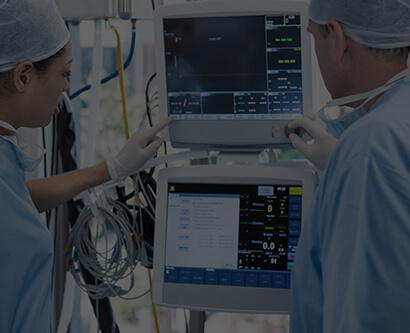
Healthcare
Hardware design for diagnostic devices, patient monitors, and medical wearables.

Agriculture
Ruggedized hardware for field equipment, environmental sensors, and asset-tracking devices.
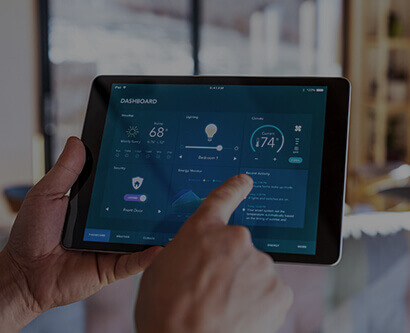
Consumer Electronics
Consumer devices, wearables, smart home solutions.

Logistics & Transportation
Embedded hardware for asset-tracking devices, vehicle telematics, and industrial sensors.
We've worked with enterprises and startups from Europe, the USA, Australia, and Asia



























Related services
Check out other services we provide.

Embedded Software Design & Development Services
Firmware development, software development for single board computers (SBC) and board support package (BSP) development – these are the types...
LEARN MORE 
LEARN MORE

FPGA design services
We design FPGA boards for high-performance tasks such as video and audio compression, algorithm acceleration, and high-speed memory interfaces.
LEARN MORE
LEARN MORE

Printed Circuit Board (PCB) Design and Layout Services
Schematic design, PCB layout, and fabrication – we offer a complete set of services for implementing printed circuit boards.
LEARN MORE
LEARN MORE